17 Mart 2020 Salı

InstoneAir and LG Bloodstock fly Competitors to Saudi Arabia for the World’s Richest Horse Race


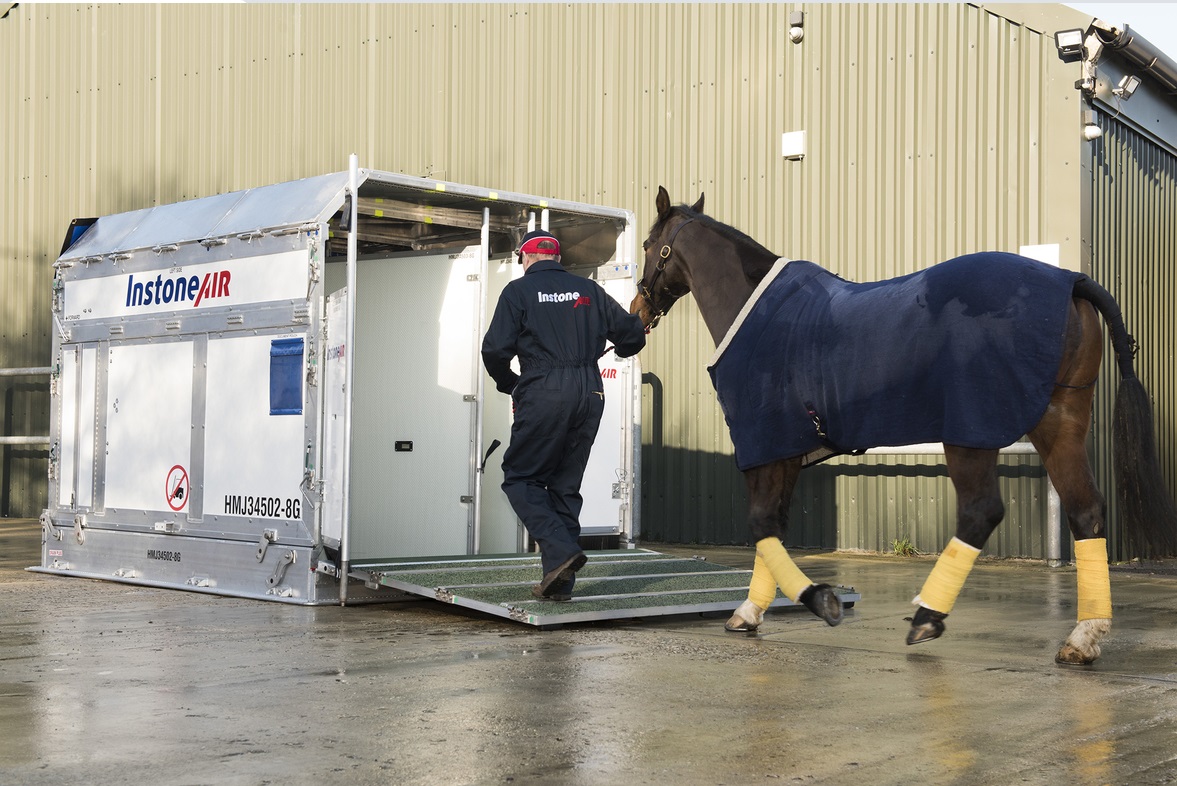
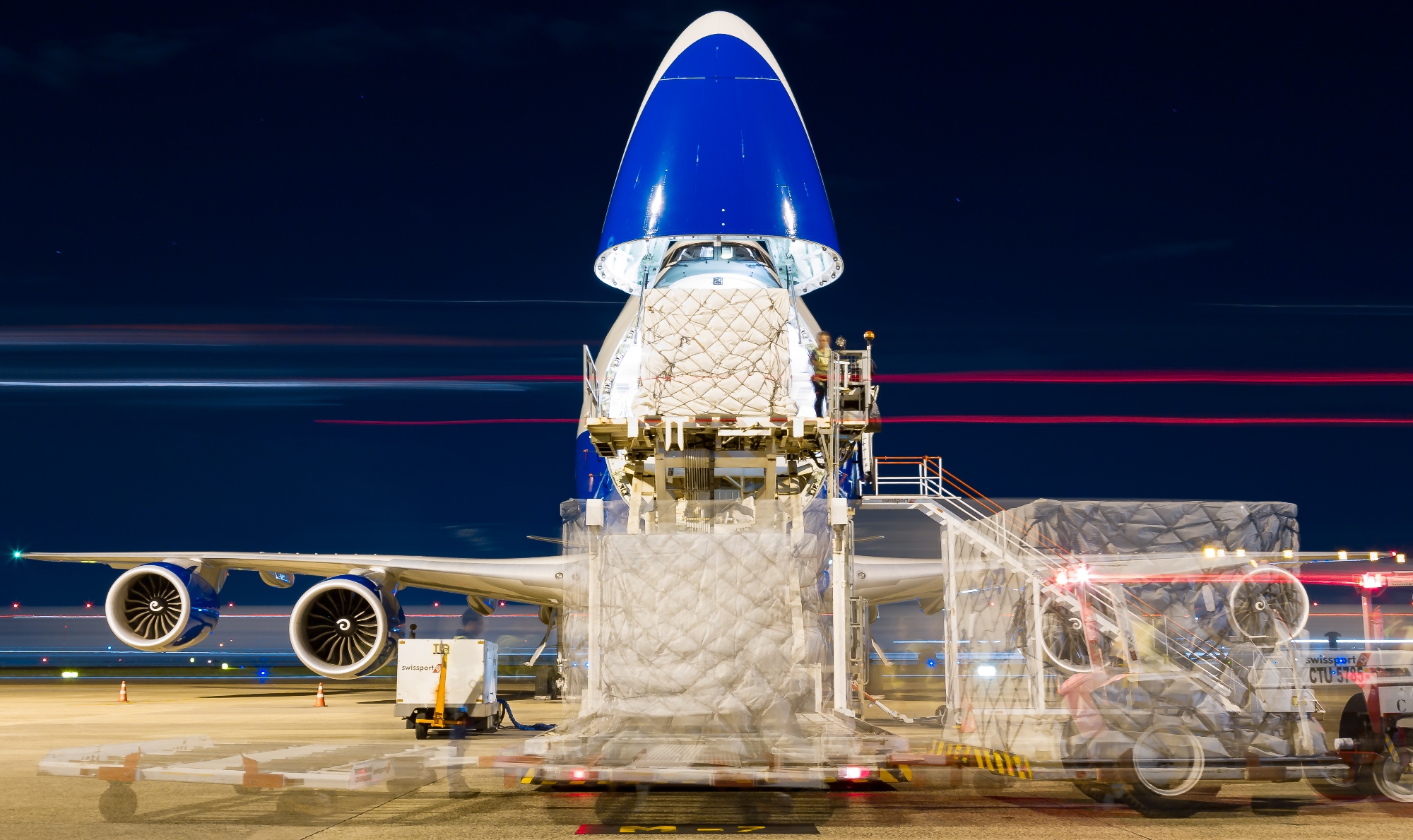
InstoneAir has been working closely with Luck Greayer (LG) Bloodstock Shipping, combining their bloodstock transportation expertise to support the world’s most valuable horse race, The Saudi Cup, which takes place in Riyadh this month and offers prize money of $20 million. The first competitors arrived safely in Saudi Arabia onboard a Kalitta Air Boeing 747 chartered by InstoneAir for flights from Los Angeles and Fort Lauderdale. The flights represent the first outings for InstoneAir’s new European Aviation Safety Agency (EASA) certified collapsible Airstables, which combine the highest standards of equine safety and comfort with improved cost efficiencies for the repositioning of empty Airstable horse stalls.
Working closely in partnership with Saudia Cargo, InstoneAir and LG have also been entrusted with moving elite racehorses from London Stansted, Shannon, Liege, Dubai and Hong Kong in readiness for the race on 29 February. Organized by The Jockey Club of Saudi Arabia, the race is expected to field a maximum of 14 elite thoroughbreds. Held over a distance of nine furlongs at Riyadh’s King Abdulaziz Racetrack, the race offers a $10 million prize to the winning horse, plus a further $10 million to be shared by those finishing down to tenth place.
Further valuable races are being staged over the 2 days of top racing. Following the most significant event in the history of horse racing in Saudi Arabia, InstoneAir will also be involved in transporting the horses back home after racing, with some also going on to compete in The Dubai World Cup races at the end of March. Jeremy Instone, Managing Director of InstoneAir, one of the world’s leading specialists in the air transportation of horses, said: “We are extremely proud to be working with LG Bloodstock, Saudia Cargo and Arabian Horse Flights, our partner in Saudi Arabia, to ensure the success of the first Saudi Cup.
The race will attract a global audience and is very important in supporting the Kingdom’s goal of becoming a leading player on racing’s world stage. With over 6,000 horses a year being safely transported to and from international sporting events using our EASA-approved Airstables, we are confident these elite, high-value thoroughbreds will arrive in peak condition, ready to make racing history.”.

Silkway West Airlines maintains Scheduled Flights to China


Sign in Log into your account Welcome! your username your password Forgot your password? Password recovery Recover your password your email The current corona epidemic is having a significant impact on the air cargo industry. However, in order to maintain the business of the customers, Silkway West Airlines has kept its scheduled and charter flights throughout those challenging and turbulent times. With more than 20 flights weekly connecting China with its global hub in Baku, Silkway is performing its operation through a mix of charter and scheduled flights.
The flights will be operated in accordance with recommendations from the WHO and other regulatory bodies as well as Silkway’s own restrictions including no crew layovers in China. “We have decided to honor the loyalty of our BSA (Blocked Space Agreement) customers also throughout difficult times. Therefore we have not followed the way in canceling all our scheduled flights by operating just charters as we think that in the long run, it will bring us even closer to our partners.
We are a forwarders airline and we will further expand on those relationships by enhancing the group of close partners,” says Wolfgang Meier, CEO/President of Silkway West Airlines. “In addition, we would like to thank our pilots and the entire team for being the utmost cooperative in finding the right pattern to keep up the operation throughout. Together with our international teams, we have managed to demonstrate a unity towards our colleagues and customers, which I am really proud of.
As a result of our ongoing operation our activities just have been broadcasted China-wide on CCTV Channel 1 and as well through other TV stations,” adds Mr. Meier. Even before the offices in Shanghai, Zhengzhou, and Tianjin could be reopened, the employees worked in-home office to ensure that the airline could offer its services with as few restrictions as possible.
“Of course it is currently a daily challenge to manage the imbalances of the various trade lanes but we do count on the understanding of our partners as this is a really special situation. And of course, we are very much focused on our operations to and from China but I shall emphasize that our global network is up and running. Markets in North America, Europe, The Mideast, South Asia, South East Asia, Japan, and Korea are been served on fully-fledged bases”, says Wolfgang Meier.
MORE STORIES CREA and DHL Partner to Offer Brands World Class Technology and...
February 18, 2020 Cathay Pacific Schedule Changes Update February 13, 2020 Volga-Dnepr Group Operates “Sterilized” Charter Flights to China February 18, 2020.

UPS’s Safest Drivers have traveled more Accident-Free Miles than Voyager Space Probe


UPS’s 10,411 Circle of Honor Drivers have collectively traveled about 15 billion miles, without so much as a fender-bender. Background context: after 42 years of rocketing into space, the Earth’s most far-flung spaceship, the Voyager 1 space probe, has traveled almost 15 billion miles. Almost.
Voyager is traveling over 38,000 miles per hour; it streaked past Jupiter, Saturn, Uranus and Neptune years ago and has been in interstellar space for 7½ years. Fifteen billion miles is enough for nearly three round trips to Neptune, the farthest planet in our solar system, or over 200 round trips to Mars. It’s enough to circle the earth at the equator about 600,000 times.
It would take the average driver over a million years to drive that many miles, and in that time he or she would have over 55,000 accidents. UPS announced the induction of 1,316 men and women into this elite group of UPS drivers who have not had an avoidable accident for 25 years or more. With those new inductees, the Circle of Honor now includes 10,411 of UPS’s active brown-clad drivers.
Collectively, these drivers have achieved more than 280,969 years of safe driving throughout their careers. That’s enough time behind the wheel to drive non-stop from Miami to San Diego – over 65 million times. And they’ve done it while helping to deliver 3 percent of the world’s GDP – 20 million packages a day.
“My congratulations go out to the thousands of hard-working UPS drivers around the world, including those from my home state of Oregon, who not only keep our economy moving but who are also part of an elite group with a remarkable record of decades of safe driving,” said Congressman Peter DeFazio (D-OR), the Chairman of the U.S. House Committee on Transportation and Infrastructure.
“I applaud the commitment to our communities and the safety of our neighbors.” Along with drivers in all 50 U.S.
states, this year’s Circle of Honor includes new members from Hong Kong, Singapore, and Taiwan. In addition to those markets, the list of non-U.S.
countries with active Circle of Honor drivers now includes Canada, France, Germany, Mexico, Switzerland, the Netherlands, and the United Kingdom. UPS’s longest-tenured safe driver remains Livonia, Mich., package car driver Tom Camp, who has now driven well over half a century – a remarkable 57 years – and delivered more than 5 million packages without an accident.
“This group has grown in size every year for decades,” said Charlene Thomas, chief human resources officer and senior vice president, global human resources and labor. “That growth is proof that our training is effective and our people’s commitment to excellence is as strong as ever. Congratulations to every Circle of Honor member, and thank you for keeping yourself and the public safe.
” Of all Circle of Honor members, 796 have been accident-free for 35 or more years, with 159 of those having driven more than 40 years without an accident. 23 drivers have eclipsed the 45-year safe driving mark. Four drivers have 50 or more years without an accident.
All new inductees and current members are issued uniform shirts and jackets with a distinctive Circle of Honor patch emblazoned with the milestone number of years of safe driving they’ve achieved. The patch is located on the driver’s left shoulder so it can be seen by other drivers. UPS began recognizing its safe drivers in 1923.
Founder Jim Casey honored the company’s first 5-year safe driver, Ray McCue, in 1928. The company’s 129,000 small-package drivers worldwide are among the safest on the roads, logging close to 3.5 billion miles per year and delivering 5.
5 billion packages annually. UPS and The UPS Foundation also support the AIP Foundation’s Safety Delivered program, which works with young, inexperienced motorcycle riders in Vietnam, Cambodia, Myanmar, Thailand, the Philippines, and India, to educate and eliminate distracted riding behavior, as well as increase helmet use among children. To date, more than 50,000 helmets have been provided as a result of this support.
UPS extends its safe driving expertise to the communities it serves through UPS Road Code® training, a teen safe driving program available in the United States and internationally.  Taught by UPS volunteers, based on the company’s safe-driving methods, the program is available to teens between the ages of 13 and 18 and other novice drivers. To date, more than 76,700 new drivers have participated.
  The program has been extended to Canada, China, Germany, Ireland, Mexico, the United Kingdom and the United Arab Emirates..

Wing Launches America’s First Commercial Drone Delivery Service


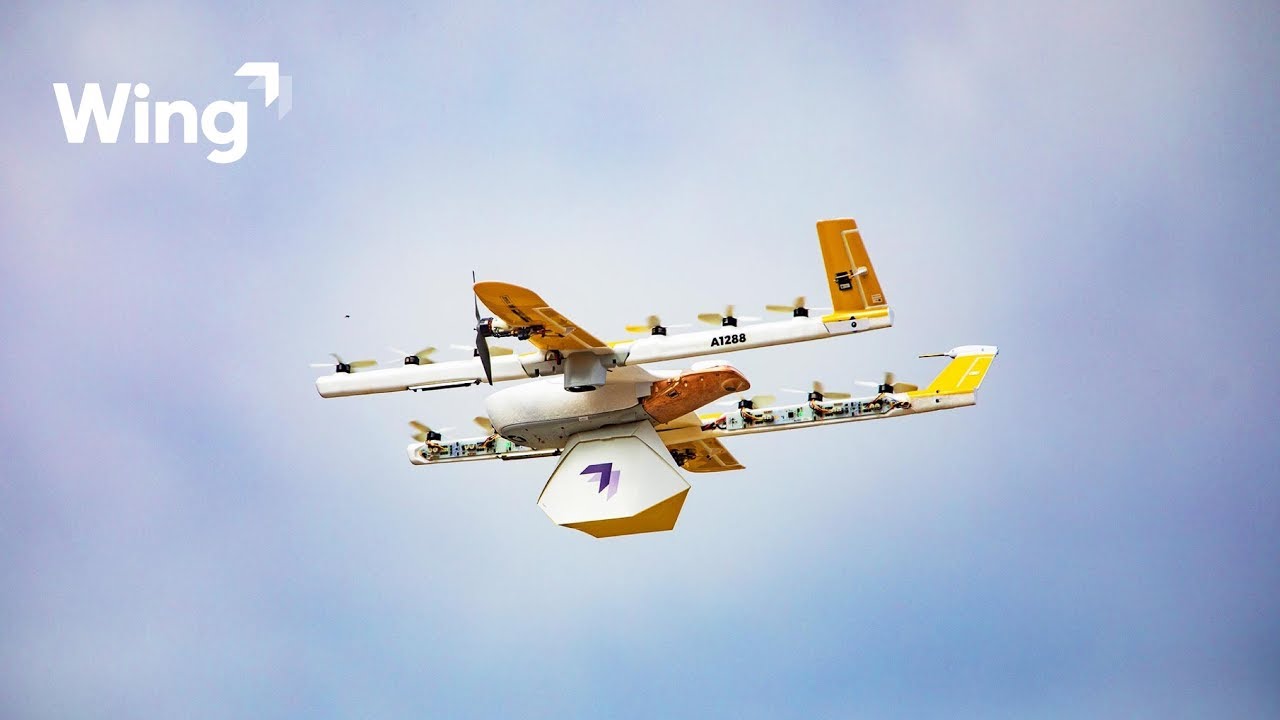
Sign in Log into your account Welcome! your username your password Forgot your password? Password recovery Recover your password your email In a first for drone delivery in the U.S., Wing is delivering packages, over-the-counter medication, snacks and gifts to residents of Christiansburg, Virginia.
With an expanded Air Carrier Certificate from the Federal Aviation Administration (FAA), Wing has become the first company to operate a commercial air delivery service via drone directly to homes in the United States. Wing’s FAA permissions are the first to allow multiple pilots to oversee multiple unmanned aircraft making commercial deliveries simultaneously to the general public, paving the way for the most advanced drone delivery service in the nation. Wing’s collaborators on this service — FedEx Express, Walgreens, and local Virginia retailer Sugar Magnolia — are the first businesses in the United States to offer this form of local air delivery to customers.
FedEx is completing the first scheduled e-commerce drone delivery in American history today, and becomes the first company in the United States to connect online retailers to last-mile drone delivery services. Walgreens is also making aviation history by completing the first on-demand, commercial drone delivery directly to a home in the U.S.
Through this pilot, Walgreens will be the first U.S. retailer to provide customers with on-demand drone deliveries of over-the counter medications and convenience items.
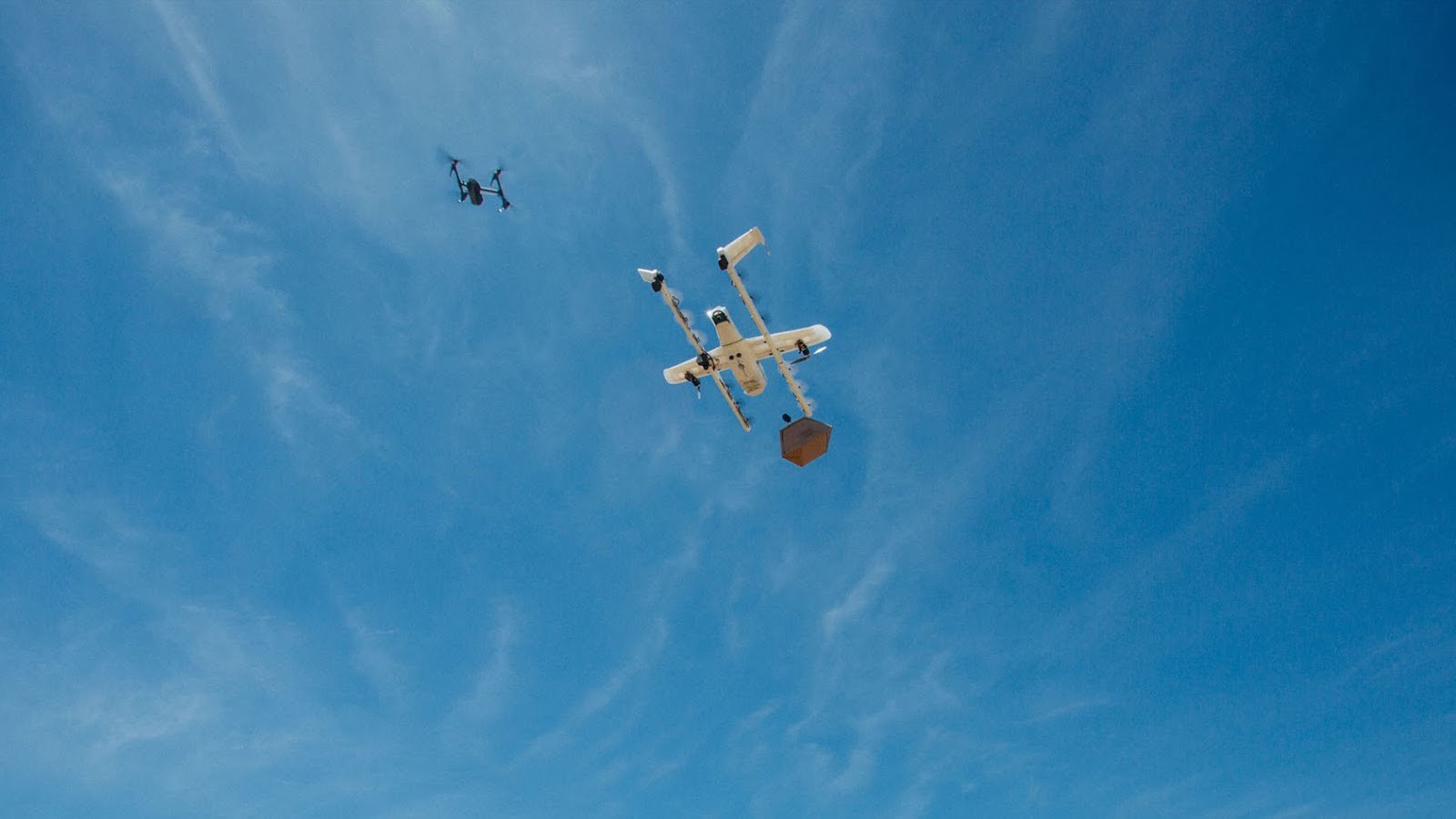
Minutes after our customers order from the Wing app from Walgreens or local Virginia retailer Sugar Magnolia, our lightweight aircraft delivers directly to their homes. Similarly, customers can opt in to receive scheduled FedEx Express deliveries by drone. Upon arrival, the aircraft gently lowers the package to a small, designated location in the yard or driveway, before returning to Wing’s “Nest” in North Christiansburg.
MORE STORIES Forecasting Airfreight Growth and Demand with IATA’s Glyn Hughes November 14, 2019 DHL Express Announces Expansion for Incheon Gateway November 1, 2019 HACTL Receive IATA CEIV Fresh Accreditation November 14, 2019.

Wing Supports ASTM Standard for Drone Remote ID


Sign in Log into your account Welcome! your username your password Forgot your password? Password recovery Recover your password your email Wing is supporting the remote identification of drones (“Remote ID”), which will help to protect the public, promote responsible flying, and keep skies open to all users. The recent publication of a new ASTM International standard for Remote reflects two years of collaboration between regulators and industry. It demonstrates that Remote ID can be implemented in a way that supports a diverse drone ecosystem, protects privacy, and enables hobbyists to participate in the airspace.
While Wing says that they agree with the objectives of the FAA’s NPRM, the proposed rule poses some challenges as drafted. Challenges Wing says that they believe that simple changes can resolve the challenges presented by the proposed rule in a safe and secure way, and enable Remote ID to be implemented quickly with existing technology. Drones are diverse.
Drones range from sophisticated commercial systems to off-the-shelf aircraft and home-built models. The rule should outline viable pathways to compliance for all commercial and recreational operators. It should permit operators to select any form of Remote ID that delivers the necessary performance.
Privacy is important. Unlike passenger aircraft flying between airports, drones operate between people, shops, hospitals, and homes. The draft rule requires operators to share substantial data with few controls.
That data may reveal sensitive information about customers and operators. Remote ID data should be capable of effective anonymization, and limited to essential information. The storage of this information should be restricted in accordance with a legal process.
Our skies are open to all. Hobbyists are vital to innovation. However, the proposed rule would make it difficult for hobbyists to build and operate their aircraft.
The final rule should recognize alternative ways for hobbyists to identify their drones, including via smartphone, and should avoid limiting their participation in the airspace. Path forward Remote ID can be implemented in a way that supports safety and security, respects privacy, and offers viable pathways to compliance. Working with ASTM International, the drone industry has developed a technical standard for Remote ID.
Wing believes that the final rule should adopt the approach outlined in the new standard. Supports a diverse range of drones. The ASTM standard outlines two methods of compliance: 1) broadcast information locally with onboard equipment; 2) share information widely via a network of UAS Service Suppliers (“USS”).
Wing believes that the final rule should allow operators to choose the best Remote ID system for their operation so long as it meets required performance. Balances transparency and privacy. The ASTM standard enables observers on the ground to identify and verify nearby aircraft.
However, it incorporates a number of technical mitigations to protect the privacy of drone customers and operators. Wing believes the final rule should incorporate the privacy protections of network Remote ID as described in the standard, and outline clear privacy protection requirements. Keeps our skies open to all.
The ASTM standard supports all kinds of operators. Compliance is simple and affordable, and operators can identify themselves without additional equipment or infrastructure. Wing believes that the final rule should allow hobbyists with low-risk, basic-capability aircraft to register their flight intent via the USS network on publicly available smartphone apps.
This is consistent with the ASTM standard for non-equipped participants, and similar to authorizations for airspace access under LAANC. Further, Wing believes that community based organizations should be permitted to establish and renew exempt flying sites beyond twelve months. MORE STORIES DSV Announces Plans for Panalpina HQ in Basel November 1, 2019 IATA Report: Airlines and Posts Cooperate for a Sustainable and Reliable.
.. March 1, 2020 Budapest Airport Set to Become Air Cargo Gateway for China November 14, 2019.

U-Freight Foresees Opportunities for E-commerce Logistics Market


Sign in Log into your account Welcome! your username your password Forgot your password? Password recovery Recover your password your email U-Freight Group CEO Simon Wong recently commented on a report that suggests the global e-commerce logistics market is likely to exceed EUR500 billion by 2024. He says his company is ready to meet the ever-increasing challenges of providing logistics services to this rapidly expanding sector of global trade. Mr.
Wong said, “Transport intelligence, a major provider of market research solutions to the global logistics industry, says e-commerce is quite a puzzle for logistics service providers. “The “exponential growth” of e-commerce and the increased role of consumers in individual transactions pose several challenges to governments and businesses alike, whether in terms of trade facilitation, safety/security or the collection of duties and taxes. “At U-Freight, in our development of e-commerce logistics solutions, we are continually trying to address the key issues stemming from increasing volumes of business-to-business (B2B) and business-to-consumer (B2C) e-commerce shipments and the time sensitivity thereof.
“Examples of those efforts include investment in several of the company’s warehouse facilities to enable them to act as e-commerce fulfilment centres. “We are a logistics partner of choice for the growing number of online channels and platforms which entrepreneurs are using to sell their own designs and products, including global eCommerce shipping platforms such as Easyship, and are heavily involved in the Fulfillment by Amazon program in several countries. “In 2019, we launched e+Solutions, a new product to assist small businesses with their e-commerce logistics needs.
“We have also been qualified by China Customs and CIQ (China Inspection and Quarantine) as a licensed Cross-border E-Commerce Enterprise and as a Cross-Border E-Commerce Logistics Service Provider. “All of these initiatives are helping us boost efficiency and capture more value, in order to capitalize on the opportunities that e-commerce is presenting.” MORE STORIES Japan Airlines Announces Freighter Codeshare Agreement with Kalitta Air October 31, 2019 Qatar Airways announces Direct Flights to Osaka, Japan November 1, 2019 Drone Delivery Canada Announces Implementation Underway at DSV Canada Customer Project March 11, 2020.

Etihad Cargo Selects ECS Group as Cargo Service Provider


In line with the recent implementation of the new global sales distribution structure across its network, Etihad Cargo, the cargo and logistics arm of the Etihad Aviation Group, has selected ECS Group, the world’s largest General Sales & Support services group, to deliver a significant scope of its new regional sales operating model across multiple-territories. Etihad Cargo has entered into Cargo Service Provider (CSP) agreements with ECS Group’s subsidiary company Globe Air to provide customer service, reservations, post-flight support, operations support, accounting and billing support services in the United States, United Kingdom, Germany, Netherlands, Singapore, Indonesia, and Malaysia. Etihad Cargo will itself lead sales activities in those territories through its own commercial organization.
Furthermore, through ECS Group’s subsidiary companies Globe Air, UniversalGSA and ExpAir, the parties entered into CSP agreements that also cover sales services in Canada, Belgium, Switzerland, Austria, the Czech Republic, Slovakia, and the Nordics, as well as Los Angeles and the offline Etihad stations in the United States. Services under the new agreements will commence on April 1st, 2020 across all the above territories, with the exception of the Czech Republic, Singapore, and Indonesia where services are expected to commence on June 1st, 2020. Abdulla Shadid, Managing Director Cargo & Logistics Services at Etihad Aviation Group, said: “We are delighted to be working with ECS Group as a strategic partner to fulfill a key pillar of our all-encompassing commercial transformation.
This milestone comes following an extensive 10-month evaluation process to source like-minded partners who share our vision for digital cargo transformation using data-driven market insights and deep customer knowledge. ECS Group’s ability to deliver cost-effective sales operations through bundling multiple jurisdictions and maximizing economies of scale was a key factor in their award.” Etihad’s renewed regional distribution strategy is designed for the carrier to lead its own sales and commercial activities in select global cargo gateways, with key leadership appointments made across North America, Europe, Middle East, Africa, and Asia.
  The partnership with ECS Group further supports this strategy by offering various complementary sales and non-sales support activities. Adrien Thominet, Chief Executive Officer of ECS Group, said “Helping Etihad Cargo to develop its business strategy is a fantastic adventure, and we are especially honored to have been chosen to support them in key markets in Asia, Europe, and North America. To maximize Etihad Cargo’s freight revenue in these regions, we have worked on unique solutions and digital tools that are tailored to and designed exclusively for the airline.
We share Etihad Cargo’s vision of putting digital at the heart of efforts to expand air freight, and this shared vision is an essential aspect of our partnership.” Etihad Cargo launched its revamped strategy in 2018 and has since rolled out significant initiatives across its fleet and network, digital capabilities, product verticals, and physical infrastructure, as well as investing in internal resources and sales organizations to drive heightened customer experience and cement its position as an international air cargo airline partner of choice..